 +36.8%
Dead keratin degradation, outperforming 1% Lactic Acid (+20.4%) for gentle exfoliation.


The power of gentle botanical keratolytic exfoliation combined with cellular longevity, ATP bioenergy, and collagen synthesis.
FLOWER POWER HIBISCUS is a preservative-free, dry active ingredient obtained from selected petals and buds of Hibiscus sabdariffa encapsulated with bioactive polymers from Acacia senegal via spray drying. Naturally rich in alpha-hydroxy and keto-acids (including Pyruvic, Hydroxycitric, and Hibiscus acids) and anthocyanins, it delivers non-irritating keratolytic exfoliation for immediate radiance while rejuvenating senescent cells and boosting dermal matrix synthesis at low dosages (0.1% to 0.2%).
+36.8%
Dead keratin degradation, outperforming 1% Lactic Acid (+20.4%) for gentle exfoliation.
Intracellular ATP bioenergy production in human fibroblasts (+26.3% in keratinocytes).
 Up to 3.24×
SIRT3 gene expression (+26.5% SIRT1), boosting mitochondrial vitality & longevity.
 +29.68%
Type I collagen synthesis in human dermal fibroblasts (in vitro Picrosirius assay).
"Combines proven botanical keratolytic exfoliation (+36.8%) and cellular ATP bioenergy (+63.3%) with anti-senescence and collagen-boosting efficacy at just 0.1% to 0.2%."
Validated across six complementary in vitro assays covering keratolytic exfoliation, cellular ATP bioenergy, fibroblast proliferation, SIRT1/SIRT3 longevity, Type I collagen synthesis, and UV-induced senolytic defense.
Evaluated using Keratin Azure chromogenic substrate (10 mg/mL, 37°C, 48h, 595 nm) against a 1% Lactic Acid positive benchmark (Ct+):
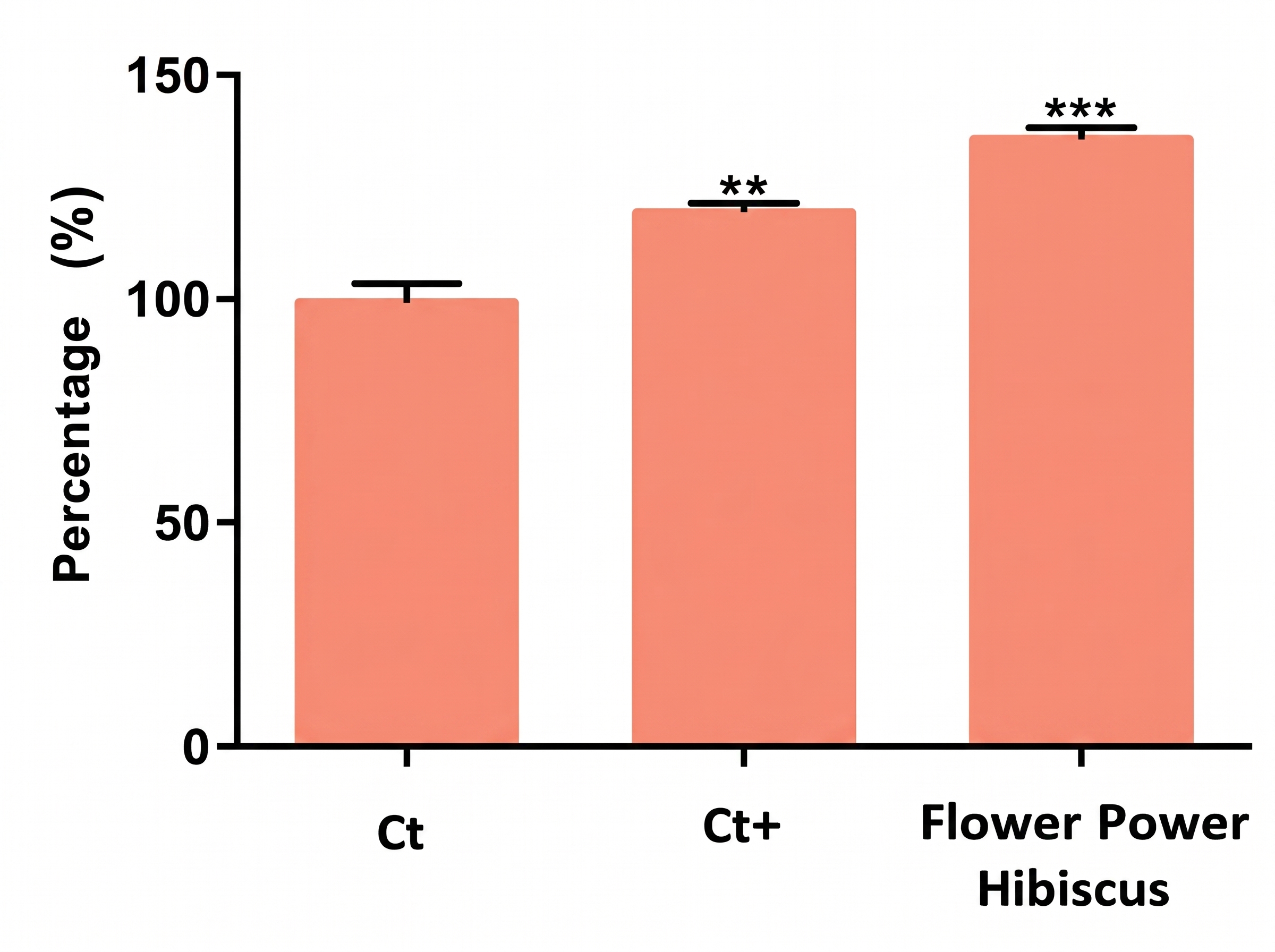
+36.8% (±1.6%) Dead Keratin Removal: Significantly outperformed untreated control (p < 0.001) and exceeded the 1% Lactic Acid benchmark (+20.4% ±1.1%) to promote immediate radiance, smoother skin texture, and gentle surface renewal.
Evaluated via luminescence (560 nm, 72h incubation) in primary human keratinocytes and dermal fibroblasts across 0.1, 0.03, and 0.01 mg/mL:
| Cell Type | 0.1 mg/mL | 0.03 mg/mL | 0.01 mg/mL |
|---|---|---|---|
| Human Keratinocytes | +19.3% (±6.0) | +26.3%* (±5.0) | +13.8% (±6.9) |
| Human Fibroblasts | +59.0%*** (±4.1) | +60.9%*** (±7.8) | +63.3%*** (±3.8) |
Mitochondrial Energy Surge: Boosted intracellular ATP up to +63.3% in fibroblasts (p < 0.001) and +26.3% in keratinocytes (p < 0.05), fueling cellular repair and metabolic vigor.

+26.54% SIRT1 Increase: Activation of SIRT1 suppresses dermal fibroblast aging and negatively regulates SASP inflammatory cytokines (IL-6, IL-8). Observed +8.6% at 0.1 mg/mL, +26.54% at 0.03 mg/mL, and +12.6% at 0.01 mg/mL.

Up to 3.24-Fold Increase (p < 0.01): Mitochondrial SIRT3 protects bioenergetic efficiency and longevity—increasing 2.4-fold at 0.1 mg/mL, 3.24-fold at 0.03 mg/mL, and 3.09-fold at 0.01 mg/mL.
Growth curve (24h, 48h, 72h, Neubauer chamber) comparing young fibroblasts (P9) vs. aged senescent fibroblasts (P40):

Youth-Like Replication Vigor: Senescent P40 fibroblasts treated with 0.03 mg/mL matched young P9 proliferation rates, and at 0.1 mg/mL replicated even faster than young cells.
Evaluated in primary human dermal fibroblasts after 72h across 0.1, 0.03, and 0.01 mg/mL vs. untreated control:
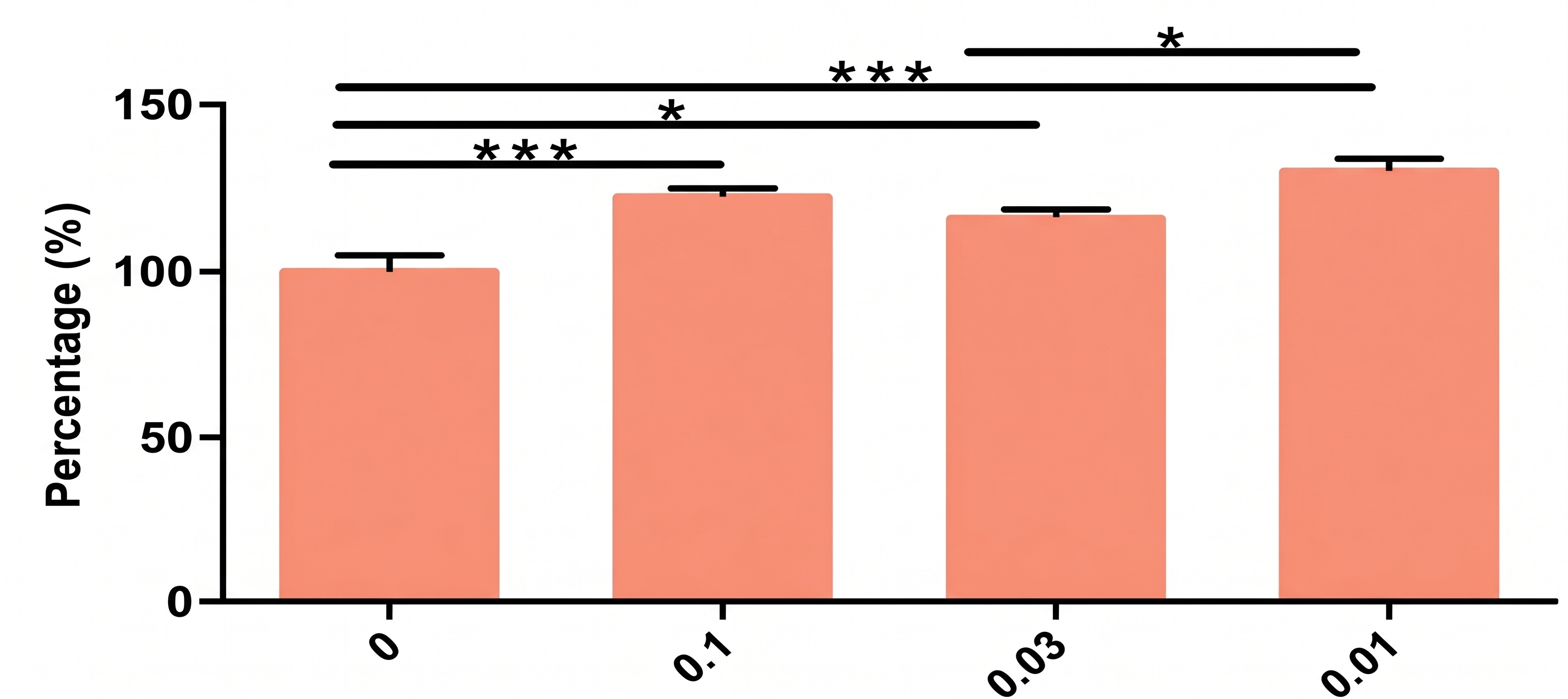
Up to +29.68% Type I Collagen (p < 0.05): Significant increase across all concentrations: +22.2% (±3.66) at 0.1 mg/mL, +15.68% (±4.55) at 0.03 mg/mL, and +29.68% (±6.59) at 0.01 mg/mL.
Evaluated in human dermal fibroblasts subjected to UV-induced senescence (0.2% and 0.4% concentrations vs. 0.01% Resveratrol positive control) via cell morphology imaging and RT-qPCR:
| Target / Biomarker | Biological Role | UV Effect vs. Control | Resveratrol (0.01%) | FLOWER POWER HIBISCUS (0.2% / 0.4%) |
|---|---|---|---|---|
| Senescent Cell Count | Morphological senescent fibroblast burden | Normalized to 100% | -18.4% (±3.0) | -15.7% (0.2%) / -19.6% (0.4%) |
| FoxO3 | Master cellular longevity & stress-resistance transcription factor | -22.5% | +158.6% | +68.6% (0.2%) / +142.6% (0.4%) |
| IL-6 & IL-8 | Pro-inflammatory SASP cytokines (inflammaging) | +41.9% / +52.8% | -9.9% / -11.5% | -35.9% / -18.3% (0.2%) • -30.5% / -16.6% (0.4%) |
| TNF-α & NF-κB | Inflammatory signaling & transcriptional cascade | +54.0% / +65.8% | -18.6% / -17.3% | -32.1% / -32.0% (0.2%) • -28.6% / -29.8% (0.4%) |
| MMP-1 & MMP-9 | Collagenase & gelatinase matrix-degrading enzymes | +79.2% / +61.5% | -17.4% / -12.9% | -19.6% / -29.6% (0.2%) • -28.4% / -30.8% (0.4%) |
| p16, p21 & p53 | Cell-cycle arrest & senescence induction checkpoints | +54.2% / +69.8% / +55.8% | -28.5% / -14.7% / -11.1% | -33.5% / -17.7% / -19.2% (0.2%) • -31.5% / -19.6% / -21.3% (0.4%) |
| TGF-β | Senescence-associated paracrine signaling factor | +91.2% | -40.3% | -42.2% (0.2%) / -40.7% (0.4%) |
Outperformed the 0.01% Resveratrol positive control across key markers including IL-6, TNF-α, MMP-1, MMP-9, p53, NF-κB, and senescent cell clearance.
Native to tropical Africa and cultivated across warm regions worldwide, Hibiscus sabdariffa (roselle) is prized for its rich phytochemistry—organic acids, anthocyanins, flavonoids, and mucilaginous polysaccharides—delivering antioxidant, anti-inflammatory, and gentle skin-renewing activity.
Native to semi-desert Sub-Saharan Africa, Acacia senegal produces a heteropolysaccharide-rich exudate under environmental stress. Used in Assessa's spray-drying microencapsulation, these biopolymers protect delicate hibiscus polyphenols and enhance stability, solubility, and controlled release.
Exploratory high-resolution liquid chromatography–mass spectrometry (LC-ESI-HRMS) and direct-infusion QExactive Plus ESI- mass spectrometry confirmed key organic acids, keto-acids, and anthocyanin glycosides responsible for gentle exfoliation and cellular protection:
| Bioactive Class | Identified Compounds (LC-ESI-HRMS) | Cosmetic Function |
|---|---|---|
| Alpha-Hydroxy & Keto-Acids | Pyruvic acid (ESI- precursor ion), Hydroxycitric acid, Hibiscus acid | Gentle keratolytic exfoliation & surface renewal without irritation |
| Anthocyanin Glycosides | Delphinidin 3-sambubioside, Cyanidin 3-sambubioside | Potent ROS scavenging, photoprotection & natural pink hue |
| Phenolic Acids & Flavonols | Gallic acid, Chlorogenic acid, Caffeic acid, Hibiscitrin, Quercetin, Luteolin | Anti-inflammaging, SASP suppression & ECM protection |
Validated through validated OECD in vitro safety guidelines, confirming high dermal tolerance and non-phototoxic performance:
| Safety Assay | Methodology / Guideline | Result & Classification |
|---|---|---|
| Skin Irritation / Corrosion | OECD TG 439 (SkinEthic™ RHE Reconstructed Human Epidermis) | Non-Irritant (GHS: Uncategorized) |
| Phototoxicity | OECD Test Guideline 432 (3T3 NRU Phototoxicity Test) | Non-Phototoxic |
| In Vitro Cytotoxicity / Acute Oral Estimate | Neutral Red Uptake / Starting Dose Estimation | IC50 = 1.6 ± 0.09 mg/mL (Estimated LD50 = 1,644.12 mg/kg) |
Technical recommendations from Assessa's Application Laboratory for optimal stability, color preservation, and sensory performance:
| Phase | INCI Name | % w/w |
|---|---|---|
| A | Aqua | q.s. to 100 |
| A | Disodium EDTA | 0.10 |
| B | Cetearyl Alcohol | 5.00 |
| B | Ceteareth-20 | 1.50 |
| B | BHT | 0.05 |
| B | Glyceryl Oleate Citrate | 1.80 |
| B | Caprylic/Capric Triglyceride | 0.20 |
| C | Phenoxyethanol (and) Ethylhexylglycerin | 1.00 |
| D | Glycerin | 1.00 |
| D | FLOWER POWER HIBISCUS | 0.20 |
| E | Citric Acid | q.s. |
Procedure: Heat Phase A to 80°C; add Phase B and homogenize for 5 min at 80°C. Cool under stirring; at ≤ 40°C add Phase C and pre-dispersed Phase D. Adjust pH to 5.0–6.0 with Phase E.
| Phase | INCI Name | % w/w |
|---|---|---|
| A | Aqua | q.s. to 100 |
| A | Sodium Citrate | 0.50 |
| B | Citric Acid | 0.50 |
| B | Glycerin | 20.00 |
| B | Propanediol | 15.00 |
| B | Butylene Glycol | 5.00 |
| B | Carbogreen EA | 10.00 |
| C | FLOWER POWER HIBISCUS | 0.20 |
| C | Butylene Glycol | 5.00 |
| D | Aqua (and) Sodium Benzoate (and) Potassium Sorbate | 1.00 |
Procedure: Dissolve Phase A. Premix Phase B and add gradually to Phase A with vigorous stirring; heat to 70°C until uniform. Add pre-dispersed Phase C and Phase D, mix until homogeneous, and hot-fill into stick molds.

Request a laboratory sample, download full technical dossiers, or connect with our global distribution network.